Omey Island Causeway: The Complete Walking Route
A step-by-step guide to the famous 5km sand path crossing. Learn tide timings, what to bring, and the best seasons for walking.

What Makes This Walk Special
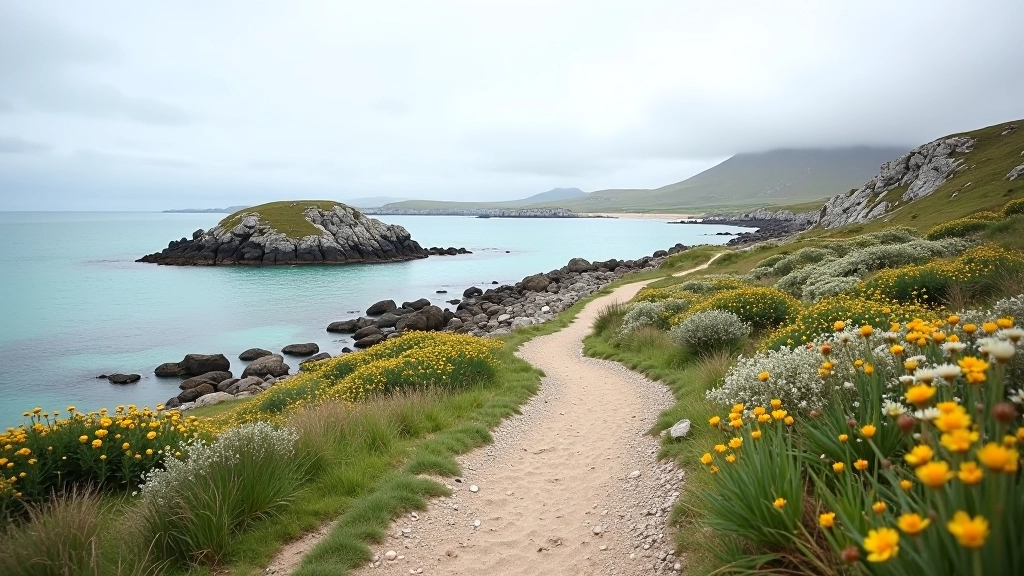
The Omey Island Causeway isn't your typical coastal path. It's a natural sand crossing that only appears when the tide retreats, creating a unique opportunity to walk across the seabed itself. You're literally walking where boats sailed just hours earlier. For many visitors, it's the most memorable experience they've had on the Irish coast.
What makes it perfect for walkers? The route's short — just 5 kilometres total — and the terrain is flat and straightforward. There's no scrambling, no steep sections, no technical difficulty. But there's genuine adventure. You'll see the island from perspectives that change with every tide cycle, and the landscape feels genuinely remote even though you're never far from the village.
Flat, manageable walk on sand
Including stops for photos
Approximate safe crossing time
Understanding the Tide Window
Before you step onto that sand, you need to understand the tide. It's not complicated, but it's absolutely critical. The causeway appears reliably twice daily, but the exact times shift by roughly 50 minutes each day because of how lunar cycles work.
Here's what you need to know: You've got approximately 6 hours of safe walking time between low tide and when the water returns. That sounds generous, but it's not as much as it seems. You need to account for getting there, actually walking, and returning before conditions change. Most walkers aim for a 2 to 3 hour window, leaving comfortable margin on both sides.
Check the tide tables before you go — they're available free online for Omey Bay. Don't rely on memory or old information. Tides shift seasonally, and what worked in June won't necessarily work in September. Download the times or write them down. Seriously.
Important Safety Notice
This guide is informational and educational. Tidal conditions vary and can change unexpectedly. Always check official tide tables before visiting, inform someone of your plans, and turn back immediately if conditions seem unsafe. Weather and water conditions can shift rapidly on Irish coastlines. We strongly recommend visiting with a local guide if you're unfamiliar with tidal crossings.
What to Pack and Wear
You're walking on wet sand, potentially in wind and changeable weather. That means your clothing choices matter more than you might think. Forget fashion — bring layers and practicality.
Start with a moisture-wicking base layer. Cotton holds water and gets cold; synthetic materials or merino wool dry quickly. Add a fleece or sweater for warmth, then a windproof outer layer. Yes, even in summer. Galway's coast gets breezy, and wet wind cools you down fast. Bring a waterproof jacket — not just water-resistant, but genuinely waterproof.
Footwear is crucial. Sturdy walking shoes with good grip work better than dedicated hiking boots (which can fill with sand and water). Sandals? Don't even think about it. Wet sand is cold, and if you slip on rocks, bare feet suffer. Bring a spare pair of socks and a towel. Your feet will thank you.
Pack: sunscreen, a water bottle, a light snack, a hat for sun protection, and a small first aid kit. Your phone should be in a waterproof pouch, not your back pocket.
The Walking Route Step-by-Step
Start from the small car park at Omey village (there's free parking). You'll see the sand causeway stretching toward the island — it's unmistakable. Walk toward it and you'll quickly transition from grass to firm sand.
The sand surface varies. Near the start, it's compact and easy to walk on. As you progress, you might encounter softer patches — this is normal. Keep your pace steady; rushing doesn't help and burns energy unnecessarily. Most people walk this section in 25 to 35 minutes.
About halfway, you'll notice the island getting noticeably closer. You'll start seeing seabirds and possibly seals in the water nearby. The light changes as you're exposed on all sides — it's genuinely beautiful. Keep your phone out for photos, but watch your footing. Wet sand can be slippery.
When you reach the island itself, there's a clear path upward. Take it slowly — rocks can be slick. Once on the island, you've got roughly 45 minutes to an hour to explore before you should head back. Don't linger too long or push the tide window. Return the same way you came.
Best Seasons and Wildlife
Timing your visit matters. Spring (April to May) brings milder weather and nesting birds — you'll see puffins, razorbills, and guillemots on the island cliffs. Summer (June to August) offers longer daylight but also busier conditions. Autumn (September to October) brings the clearest light and fewer crowds. Winter is technically walkable but weather is unpredictable and daylight is short.
You'll almost certainly see grey seals in the water. They're curious but not aggressive — just give them space. Birdwatching is excellent year-round. If you're quiet and patient on the island, you might spot rabbits, which have no natural predators there and aren't shy.
The causeway itself transforms seasonally. Spring sand is firmer from winter storms. Summer brings softer sand and warmer water. Autumn sand is excellent for walking. Choose your season based on weather tolerance and how much solitude you want.

Making the Most of Your Visit
The Omey Island Causeway walk isn't complicated. It doesn't require special training or equipment. What it requires is respect for the tide and straightforward preparation. Check the tides, dress appropriately, pack the essentials, and give yourself enough time. Don't rush. This walk is meant to be savoured — the sand under your feet, the light on the water, the sense of walking where the sea was hours before.
Many visitors return multiple times across different seasons. The walk stays essentially the same, but the experience changes completely. Summer brings different light than autumn. Spring offers different wildlife than winter. It's worth experiencing at least twice to appreciate how this place transforms with the seasons.
Plan ahead, respect the tide, and you'll have one of those walks you remember years later. That's what makes this route special.